Second Life for ICBMs . . . .
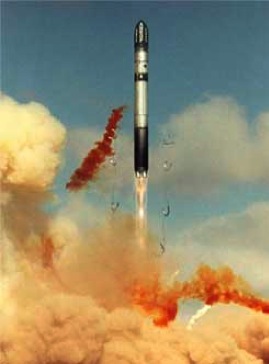
DNEpR Blasts Off Photos [7]


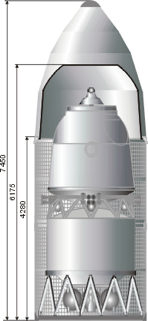
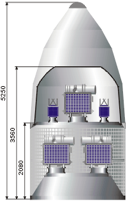
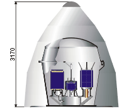
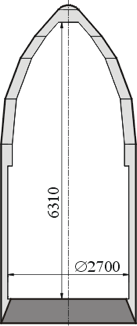
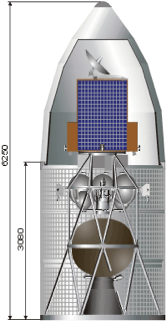

Size of the Payload Bay and Sample payload Configurations [7]
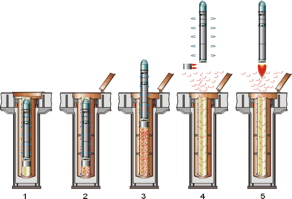
The DNEPR launches from a silo like all Russian missiles.
Since 1999, the Russian company called International Space Company, ISC Kosmotras, has been launching satellites into earth orbit on top of their rocket, the DNEPR. The DNEPR rocket wasn’t developed for the job it has now though. It is an modified ICBM, Soviet intercontinental ballistic missile known as the SS-18 Satan. Instead of carrying satellites to space these missiles sat in Soviet silos with multiple nuclear warheads aimed at the United States. They were the biggest and most destructive missiles in the Soviet arsenal. This was in the 1970-80’s during the ‘Cold War’ and of course, the U.S. also had its share of silos with missiles aimed at Russia. Now that the Cold War is over, both the U.S. and Russia have retired many of these types of missiles. By converting them into space boosters the Russians can make money in the commercial business of launching satellites into orbit. It’s also cheaper to convert the missiles for commercial use than destroy them. The ISC plans to convert around 150 ICBMs for use as space launchers and market them to other nations. They have already made 10 launches.
Our Rover Project will buy a ride on the DNEPR and share the payload bay with other companies sending their satellites into orbit. This will greatly reduce the price for our robotic mission to the moon. The ISC Kosmotras sells cargo space on its rocket for as little as $10,000 per kilogram for a full payload. Quite a bargain! The rocket can achieve LEO, low earth orbit, and place the satellites into orbit and then continue on to lunar trajectory ejection point and send us on our way to the moon. [7]