1700’s - The Longitude Act of 1714 issued by the British Parliament offered a cash prize, ₤20,000, for developing a precise method for using time to navigate the oceans. Many famous scientists, including Galileo, attempted to win the prize. John Harrison solved the problem with his marine timekeeper H4 called “The Watch.” Click here for some interesting info. [2]
1800’s - The French Academy put up 100,000 francs for a practical process to extract soda ash from seawater, an important need at the time. Products like soap, glass and textiles used the alkaline compound soda ash so it was in great demand. The British Isles had few trees, a source of soda ash. That left only the kelp that washed up from the sea as a native source. Modern chemical industry is based upon the work of the winner, a Frenchman named Nicholas Le Blanc. His process for getting soda from sea water was used for years. [3]
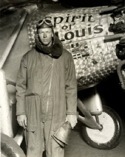
1900’s - In 1919 The Orteig Prize, offered by wealthy hotel owner Raymond Orteig, challenged the aviation field to fly non-stop from New York to Paris. Charles Lindbergh, an unknown airmail pilot at the time, took home the $25,000 in 1927 by successfully landing his plane,the Spirit of St. Louis, in Paris after crossing the Atlantic ocean alone. By this one act Lindbergh won the hearts of the whole nation and changed the world forever creating a $300 billion aviation industry. The $20 million Ansari x Prize was modeled after the Orteig. X Prize hopes these new competitions will also change the world and create a new future. [4]