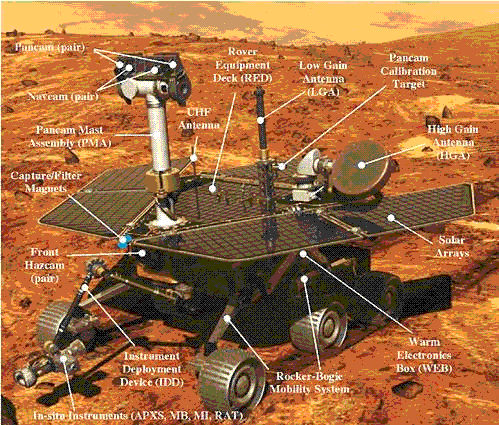
1. The layout of the MER rover(s)
2. Weighs 174 Kilos
3. 1.5 Meters high
4. 2.3 Meters wide
5. 1.6 Meters long
6. The 6 wheels are 10 inches in diameter
7. It is designed to travel 100 yards a day
8. It lasts about 90 days on Mars
9. It has 8 heaters to keep the batteries warm
10. It has solar panels to recharge the batteries during the day
11. It has 2 high resolution color stereo cameras to survey to environment.
12. It has a MTES(Miniature Thermal Emission Spectrometer) that looks at the infrared heat signature and uses it to determine the chemical makeup of the Martian soil
13. One of its functions is to determines the rocks, soil, and surface features
14. It has an Alpha-particles X-ray Spectrometer that analyzes rocks and soil, and gathers information on the weather
15. It has a Mossbauer Spectrometer to determine the types of iron-bearing materials with great accuracy
16. It has a rock abrasion tool used to break open rocks for internal examination
17. It has magnet arrays to attract magnetic minerals that may provide clues to the planet's past
18. The main energy source of the rover is a multi-panel solar array. (It look like wings.)
19. The rovers require 100 Watts of power to perform their primary functions
20. It has 2 rechargeable batteries that provide energy when the sun isn't shining
21. The rovers will produce 140 watts of power while in direct sunlight,but because they only need 100 watts, (the same as a standard light bulb) the extra 40 goes into a battery to be used later in darkness
22. By the end of the 90 sol period (90 Martian days) the rovers will only be producing 50 watts of power and perform only about half of the primary functions due to dust and seasonal changes that are a result of Mars's tilted axis
23.The mission of the MER rover SPIRIT is to determine the history of the climate and water on Mars. The geologic record at the two landing sites will be studied and evaluated to determine whether life could have formed on the planet.
Images and measurements sent back by each rover will help scientists determine which soils and rocks to examine and where to send the rover.